
Exploring the
Spiritual Landmarks
of India
Your complete 2026 guide to India’s most sacred pilgrimage destinations — from the holy ghats of Mathura and Varanasi to the divine temples of Ayodhya and Haridwar. Plan your perfect spiritual journey.
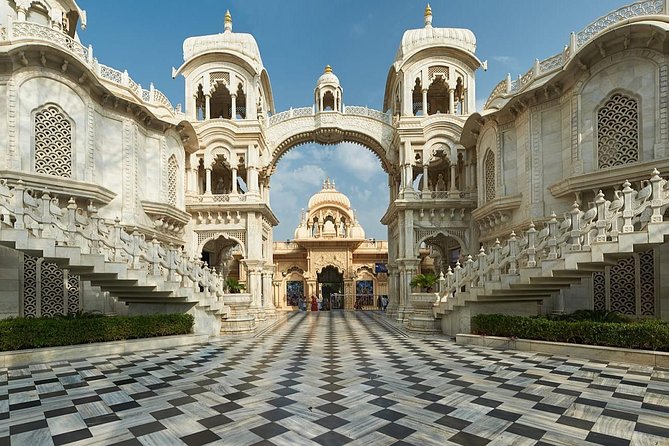
India is a land where the divine is woven into the very soil — where ancient rivers sing hymns, where every stone is a story, and where millions of devotees walk barefoot on sacred ground every single day. From the banks of the holy Yamuna in Mathura to the eternal flames on Varanasi’s ghats, the spiritual landscape of India is among the most profound on earth.
Whether you are a lifelong devotee embarking on your first Char Dham, a first-time pilgrim seeking the blessings of Lord Krishna, or a thoughtful traveller drawn to the depth of India’s sacred traditions — this guide walks you through the country’s most important spiritual landmarks, with honest, practical advice on how to visit each one.
Why India’s Spiritual Landmarks are Truly Unique
India is home to some of the world’s oldest living religious traditions. Unlike museums or monuments frozen in time, India’s sacred sites are alive — continuously worshipped, continuously vibrating with the prayers of millions. They are not relics; they are living relationships between the divine and the devoted.
What makes a visit to an Indian pilgrimage site unlike any travel experience in the world is the living ritual — the pre-dawn Mangal Aarti at ISKCON Vrindavan, the roar of conch shells at Har Ki Pauri, the incense smoke drifting through the lanes of Varanasi, the thundering chants of “Jai Shri Ram” in Ayodhya. These are not performances. They are the unbroken thread of a civilisation’s dialogue with the eternal.
For the modern pilgrim travelling from India’s major cities, the most accessible and rewarding circuit of spiritual landmarks lies across North India — a region that holds the birthplaces of Lord Ram and Lord Krishna, the holiest river banks in Hinduism, and the gateway to the sacred Himalayas.
Top Spiritual Landmarks of India
Here is our curated guide to India’s most important pilgrimage destinations — with what to see, when to visit, and practical travel details for each:
The twin cities of Lord Krishna are the heart of North India’s spiritual circuit. Mathura is the birthplace of Lord Krishna — one of the most revered deities in Hinduism — and is home to the sacred Krishna Janmabhoomi complex and the ancient Dwarkadhish Temple. Vrindavan, just 15 km away, is where Lord Krishna spent his childhood; its 5,000+ temples and the beloved Banke Bihari Temple draw millions of devotees every year.
Prem Mandir Light Show: Every evening 7:30 – 8:00 PM (free)
Ayodhya — the birthplace of Lord Ram — has been transformed into one of India’s most significant pilgrimage destinations following the inauguration of the grand Ram Mandir in January 2024. The city on the banks of the sacred Sarayu River now draws millions of devotees from across the world. Beyond the Ram Mandir complex, Ayodhya is home to the ancient Hanuman Garhi, Kanak Bhawan, and over 100 ghats that come alive at sunset during the Sarayu Aarti.
Sugam Darshan (free): Official e-pass via Shri Ram Janmabhoomi Teerth Kshetra trust portal
Varanasi — also known as Kashi or Banaras — is one of the world’s oldest continuously inhabited cities and perhaps the most spiritually charged place in all of India. Situated on the banks of the Ganga, it is the city of Lord Shiva and the ultimate place of liberation (moksha) in the Hindu tradition. The Ganga Aarti at Dashashwamedh Ghat every evening is one of the most mesmerising spiritual spectacles in the world — a choreographed ritual of fire, incense, flowers, and chanting that leaves every witness transformed.
Ganga Aarti: Every evening at sunset (approximately 6:00–7:00 PM)
Haridwar — meaning “Gateway to God” — is where the sacred Ganga descends from the Himalayas onto the plains. The Har Ki Pauri Ghat is one of the holiest bathing ghats in India, and the evening Ganga Aarti here, with thousands of lamps floating on the river, is an experience that touches the soul. Rishikesh, just 25 km upstream, is the world’s yoga capital — a serene mountain town where ancient ashrams, yoga centres, and the sound of Sanskrit mantras fill the air on the Himalayan riverbanks.
Mansa Devi Temple: 6:00 AM – 8:00 PM (cable car available)
The extended Braj Bhoomi circuit beyond Mathura and Vrindavan encompasses several extraordinary pilgrimage sites. Govardhan Hill — which Lord Krishna lifted on his little finger to shelter the people of Braj from Indra’s storms — is circumambulated by millions of devotees on the 23-km parikrama path. Barsana is the birthplace of Radha Rani and is world-famous for the spectacular Lathmar Holi, where women playfully beat men with sticks. Gokul is where baby Krishna was taken after his birth.
Radha Rani Temple Barsana: 5:00 AM – 12:00 PM & 4:00 PM – 9:00 PM
While primarily a heritage destination, Agra holds deep spiritual significance — the Taj Mahal was built as an act of devotion and love, and the Agra Fort houses several temples within its Mughal architecture. The nearby Fatehpur Sikri contains the sacred Dargah of Sheikh Salim Chishti, a revered Sufi shrine that draws devotees of all faiths. Agra pairs perfectly with a Mathura Vrindavan tour — just 55 km separates the two.
Best Time: Arrive at the Taj at sunrise for the most beautiful light and fewest crowds
The North India Pilgrimage Circuit
For pilgrims based in Delhi or flying into Delhi, North India offers one of the richest spiritual circuits in the world — multiple sacred destinations reachable within 1–10 hours from the capital. Here is a suggested route and travel time from Delhi for a 7-day North India pilgrimage:
| Destination | Distance from Delhi | Travel Time | Ideal Stay | Taxi Fare (Sedan) |
|---|---|---|---|---|
| Mathura & Vrindavan | 150 km | ~2.5 hrs | 1–2 Days | ₹2,200–₹2,500 |
| Agra (Taj Mahal) | 200 km | ~3 hrs | 1 Day | ₹2,800 |
| Haridwar & Rishikesh | 220 km | ~4.5 hrs | 2 Days | ₹3,500 |
| Ayodhya | 640 km | ~9 hrs or train | 1–2 Days | ₹5,500 |
| Varanasi | 820 km | ~13 hrs or fly | 2–3 Days | On Request |
The most popular 7-day North India circuit from Delhi is: Day 1–2 Mathura Vrindavan + Govardhan, Day 3 Agra (Taj Mahal), Day 4 drive or train to Haridwar, Day 5 Rishikesh, Day 6–7 fly or train to Varanasi. We handle the entire logistics — contact us for a custom itinerary and transparent quote.
Spiritual Tour Packages — Book with Vrinda Tour & Taxi
Choose from our curated North India pilgrimage packages, designed for devotees, families, and groups. All packages include AC cab, driver, and guide. Official darshan fees, where applicable, are collected transparently and separately.
📋 Request a Custom Pilgrimage Quote
Best Time to Visit India’s Spiritual Landmarks
Temperatures in Mathura, Agra, and Varanasi regularly exceed 42°C in May and June, making outdoor temple visits and ghat walks extremely challenging, especially for elderly devotees and children. If your dates are fixed in summer, start all visits by 6:00 AM and rest between 11 AM and 4 PM.
Essential Travel Tips for Indian Pilgrimages
- Wear modest, conservative clothing that covers shoulders and legs at all temples.
- Carry a light dupatta or stole to cover your head — required at most temples.
- Remove footwear before entering all temple premises. Carry a small cloth bag for your shoes.
- Start all temple visits as early as possible (5:30–6:00 AM) — crowds, heat, and queues build as the day progresses.
- Carry small denomination notes (₹10–₹100) for donations and prasadam.
- Book a trusted, knowledgeable local guide — they unlock the stories, rituals, and hidden corners of every sacred site.
- Stay hydrated — carry a water bottle and replenish at safe, sealed sources.
- Respect all religious customs, rituals, and photography restrictions — when in doubt, ask your guide.
- Do NOT carry leather items (belts, leather wallets, leather shoes) inside many temple premises.
- Do NOT take photographs inside temples without explicit permission — many temples strictly prohibit this.
- Do NOT bring non-vegetarian food or alcohol to Mathura, Vrindavan, and other sacred Hindu temple towns.
- Avoid trusting agents who promise “guaranteed VIP entry” for a flat fee — always verify through official channels or with our team.
- Do NOT feed monkeys — particularly in Mathura, Vrindavan, and Rishikesh; they can be aggressive.
- Avoid visiting on Ekadashi days if crowds are a concern — these fasting days bring enormous volumes of devotees to every major temple.
Frequently Asked Questions
Which are the top spiritual landmarks to visit in India?
India’s most important spiritual landmarks include Mathura & Vrindavan (birthplace of Lord Krishna), Ayodhya (birthplace of Lord Ram with the new Ram Mandir), Varanasi (the city of Shiva and the Ganga Aarti), Haridwar & Rishikesh (gateway to the Himalayas), Govardhan and Barsana (Braj circuit), Tirupati Balaji (Andhra Pradesh, most visited temple in the world), and Dwarka (one of the Char Dham, Gujarat). Each offers a unique and profound spiritual experience.
How can I plan a multi-city spiritual tour of India from Delhi?
A popular North India pilgrimage circuit from Delhi covers Mathura Vrindavan (Day 1–2), Agra Taj Mahal (Day 3), Haridwar Rishikesh (Day 4–5), and Varanasi (Day 6–7, best reached by flight or overnight train). Our 7-day North India Spiritual Circuit package covers all these destinations with AC taxi, experienced guide, and hotel bookings. Contact us for a free custom itinerary and quote.
What is the best time to visit India’s spiritual landmarks?
October to March is the best time for most North India pilgrimage destinations — the weather is pleasant and ideal for outdoor temple visits and ghat walks. Festival seasons like Holi (February–March in Vrindavan/Barsana), Janmashtami (August in Mathura), Diwali (October/November in Ayodhya and Mathura), and Ram Navami (March/April in Ayodhya) offer the most vibrant spiritual experiences but draw the largest crowds. Book accommodation and transport well in advance for festival dates.
What should I wear when visiting Hindu temples in India?
Always wear modest, conservative clothing that covers your shoulders and legs. Salwar kameez, kurta-pyjama, dhoti, or cotton sarees are ideal for both comfort and respect. Carry a dupatta or stole to cover your head inside temples — this is required at most major temples. Remove footwear at all temple entrances. Avoid leather items (belts, leather wallets) at many temple premises, particularly Jain and some Vaishnava temples.
Is it safe to travel for solo female pilgrims at India’s spiritual sites?
Yes, most major North India pilgrimage destinations are generally safe for solo female travellers, especially well-managed temple towns like Mathura, Vrindavan, Haridwar, and Rishikesh during daylight hours. Travelling with a trusted guide is strongly recommended, particularly around smaller ghats, less-visited temples, and after sunset. Our tour packages include a dedicated guide throughout the journey for added safety, comfort, and a richer experience.
Can Vrinda Tour & Taxi arrange multi-city pilgrimage tours?
Yes, multi-city North India pilgrimage tours are our speciality. We combine Mathura Vrindavan with Agra, Govardhan, Ayodhya, Haridwar, and other destinations in a single, well-planned itinerary. We handle all logistics — AC taxi, experienced local guide, hotel booking, and VIP Darshan assistance wherever officially available. Contact us via WhatsApp or phone for a free, personalised consultation and quote.