
Exploring the
Spiritual Heritage
of Mathura & Vrindavan
A deep dive into the sacred history, ancient temples, mystical groves, holy ghats, and living traditions of Braj Bhoomi — the eternal land of Lord Krishna.
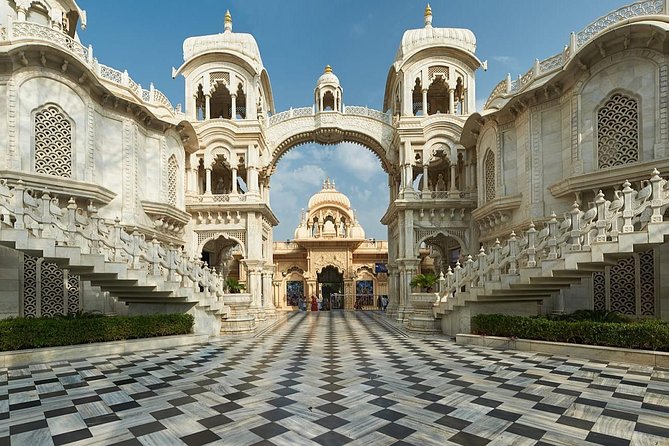
In the heartland of northern India, along the banks of the sacred Yamuna River, lies a land unlike any other on earth. Mathura and Vrindavan — the twin cities of Lord Krishna — are not merely pilgrimage destinations. They are a living, breathing civilisation of devotion that has endured for over five thousand years. This is Braj Bhoomi: the land where the Supreme Being chose to walk, play, and reveal his divine nature to humanity.
For millions of Vaishnavas — followers of Lord Vishnu and his avatar Krishna — every stone, tree, river, and path in Braj carries the imprint of the divine. This guide explores the spiritual heritage of Mathura and Vrindavan in depth: its history, its sacred sites, its living traditions, and how to experience this extraordinary land with the reverence it deserves.
The History & Mythology of Braj Bhoomi
The spiritual history of Mathura is inseparable from the life of Lord Krishna, as recorded in the Srimad Bhagavatam, the Mahabharata, and the Harivamsa — texts that are between 1,500 and 5,000 years old. Mathura is mentioned in the Ramayana as a great city ruled by the sage Shatrughna, and later in the Mahabharata as a thriving Yadava kingdom ruled by Ugrasena, whose nephew Kansa became its tyrannical overlord.
It was into this world — to free the people from Kansa’s oppression — that Lord Vishnu descended as Krishna, born at midnight in the prison cell of Vasudeva and Devaki, at the exact spot where the Krishna Janmabhoomi temple now stands. This divine birth is the event that consecrated Mathura as sacred ground for all of eternity in the Vaishnava tradition.
Sacred Sites & Their Spiritual Significance
Beyond the famous temples covered in our complete travel guide, Mathura and Vrindavan contain a remarkable depth of sacred geography. Every site is tied to a specific episode from Krishna’s life — making each visit an encounter with living scripture.
The Garbhagriha (prison cell) within the Krishna Janmabhoomi complex is considered the most sacred spot in all of Mathura. A small marble platform marks the exact site where Lord Krishna is believed to have been born at midnight on Ashtami (the eighth lunar day) of Bhadrapada month. The spiritual charge of this site is palpable to every devotee who enters.
Nidhivan is perhaps the most mysterious and spiritually charged site in all of Vrindavan. This ancient grove of intertwined tulsi trees, their trunks twisted as if caught mid-dance, is believed to be where Lord Krishna performs his divine Raas Leela with Radha and the Gopis every night. The grove is sealed at sunset — no human, animal or bird remains inside after dusk. Those who have reportedly tried to witness the Raas have lost their sanity or their sight. The caretakers of the grove leave offerings every evening: a bed prepared, betel leaves, sweets — found consumed and scattered by morning.
Seva Kunj is a sacred garden adjacent to Nidhivan where Radha and Krishna are believed to have rested after the Raas Leela. The grove contains a small temple — Lalita Sakhi Mandir — and an ancient tank. The trees here are said to bow towards the centre of the grove in reverence. Like Nidhivan, it is sealed at sunset and managed by the Goswamis of Vrindavan. No males are permitted inside after sunset — even the guards must be women in the local tradition.
Kans Qila (Kansa’s Fort) stands on the banks of the Yamuna in Mathura, believed to be built on the ruins of the tyrant Kansa’s palace — the very fort from which Kansa ruled Mathura and where Krishna eventually slew him. The current structure visible today is largely a Mughal-era fort built by Akbar. The site offers a panoramic view of the Yamuna River and the Vishram Ghat below, and is archaeologically significant as layers of habitation going back to the Kushana period have been found here.
The Government Museum of Mathura houses one of India’s finest collections of ancient sculpture — the world-famous Mathura School of Art. Spanning the Kushana period (1st–3rd century CE) through the Gupta golden age (4th–6th century CE), the collection includes the earliest images of the Buddha in human form (previously only depicted through symbols), and exquisite red sandstone images of Krishna, Vishnu, and Jain Tirthankaras. For any lover of Indian art and history, this museum is unmissable.
The Holy Ghats of Mathura
The 25 ghats of Mathura stretch along the Yamuna River and are central to the city’s spiritual life. Each ghat is associated with a specific episode from Krishna’s life or Vedic mythology. The evening Yamuna Aarti at Vishram Ghat — performed at sunset with lamps, flowers, and chanting — is one of the most moving religious ceremonies in all of north India.
Arrive at Vishram Ghat by 6:00 PM to get a good position for the evening Yamuna Aarti (approximately 6:30–7:00 PM). The sight of hundreds of lamps being offered to the sacred river, accompanied by conch shells, bells, and the singing of devotional hymns, is a deeply moving spiritual experience.
The Mystical Groves & Forests of Vrindavan
Vrindavan’s original landscape was a dense forest of kadamba, tamala, and tulsi trees — the setting of Krishna’s childhood pastimes. Sacred tradition identifies twelve primary forests (Dvadasa Vanas) of the original Vrindavan, of which remnants still exist. The most visited today are:
- Nidhivan: The most sacred and mysterious — believed to be Krishna’s nightly Raas Leela ground (see Sacred Sites above).
- Seva Kunj: Radha-Krishna’s resting place after the Raas, sealed at sunset, managed by the Goswamis.
- Vrinda Kund: A small but ancient kund (sacred tank) associated with Vrinda Devi (Tulsi), the presiding goddess of Vrindavan whose name gives the city its name.
- Imli Tala: A tamarind (imli) tree under which Srimad Chaitanya Mahaprabhu is said to have sat and wept for Krishna during his visit to Vrindavan in 1515 CE. The original tree is preserved within the Imli Tala Mandir.
- Kaliya Ghat: The ghat on the Yamuna where young Krishna tamed the multi-headed serpent Kaliya, whose poison had been killing cattle and villagers.
Living Traditions & Festivals of Braj
What makes Mathura and Vrindavan truly extraordinary is that the sacred traditions of Braj are not confined to temples or to history. They are a living civilisation of devotion — expressed through festivals, music, dance, and daily ritual that has been unbroken for centuries.
🌙 Janmashtami — Krishna’s Birthday
The grandest celebration in Braj, Janmashtami (usually in August) marks the birth of Lord Krishna at midnight. The temples of Mathura and Vrindavan are decorated magnificently; millions of pilgrims pour in for the week-long celebrations. The midnight moment — Nishitha Puja — at Krishna Janmabhoomi, when the birth is re-enacted and the idol is bathed in milk and honey, is electrifying.
🎨 Holi — The Festival of Colours
Holi in Braj is the most colourful and extended Holi in the world, beginning nearly a week before the main festival. The sequence unfolds across different villages — Lathmar Holi at Barsana (women beat men with sticks), Phoolon Wali Holi at Banke Bihari (flowers instead of colours), and the grand Rangbhari Ekadashi at Dwarkadhish Temple in Mathura.
🪄 Raas Leela — The Divine Dance
The Raas Leela is a classical devotional dance-drama performed in the temple courtyards of Vrindavan depicting episodes from Krishna’s life. Some Raas Leela companies in Vrindavan have been performing continuously for generations. Evening performances, particularly around Kartik month (October–November), are a unique and deeply moving cultural experience.
🌺 Radhashtami
Radhashtami celebrates the birth of Radha Rani — considered the supreme form of divine love and devotion in the Vaishnava tradition. The temples of Vrindavan and Barsana are beautifully decorated; the Radha Rani Temple at Barsana hosts the grandest celebrations.
The Braj Mandal Parikrama
The Braj Mandal Parikrama is one of India’s great pilgrimage journeys — an 84-kos (approximately 268 km) circumambulation of the entire Braj region, covering all the major sacred sites associated with Krishna’s life. The circuit connects Mathura, Vrindavan, Govardhan, Gokul, Nandgaon, Barsana, Radhakund, and dozens of smaller villages that form the sacred geography of Krishna’s childhood world.
- On foot: The full Braj Parikrama takes 1–2 months and is traditionally done barefoot. Tens of thousands of devotees complete it each year, typically during the month of Kartik (October–November).
- By vehicle: A condensed 2–3 day car circuit covers the major sites. Our 2-day Braj Complete Darshan package covers Mathura, Vrindavan, Govardhan, and Barsana in comfort.
- Govardhan Parikrama: The 23 km circumambulation of Govardhan Hill (the hill Krishna lifted to protect the people of Braj) is the most popular single Parikrama, doable in one day from Mathura.
Mathura (birthplace) → Vrindavan (childhood Leela) → Gokul (infancy, foster home of Nanda Maharaja) → Govardhan (hill Krishna lifted) → Nandgaon (village of Nanda Baba) → Barsana (village of Radha Rani). Each site deepens the story of Krishna’s life in Braj.
Spiritual Heritage Tour Packages
Curated itineraries designed to give you the deepest possible experience of Braj Bhoomi’s spiritual heritage — with knowledgeable guides, honest darshan assistance, and comfortable transport.


Tips for a Meaningful Spiritual Yatra
- Read or listen to some episodes from the Srimad Bhagavatam (10th Canto) before your visit — the stories come alive at every site.
- Dress in cotton, earth-toned or white clothes — comfortable for walking and respectful at all temples.
- Start your day by 5:00–6:00 AM — the early morning atmosphere in Vrindavan is unlike anything else in India.
- Carry a jhola (cloth bag) for your footwear — you will be removing your shoes constantly at temple entrances.
- Be present. Put the phone down occasionally. The atmosphere of Braj is something to absorb slowly.
- Ask your guide questions — a good Braj guide knows layers of stories behind every stone and tree.
- Never enter Nidhivan or Seva Kunj after sunset — local belief holds this to be extremely inauspicious.
- Photography is prohibited inside most temples and strictly so inside Nidhivan.
- Speak softly near the mystical groves — they are considered active sacred spaces.
- Do not engage with monkeys — Vrindavan and Mathura have a very large, often aggressive monkey population.
- Both cities are strictly vegetarian — respect this as part of the sanctity of Braj Bhoomi.
Frequently Asked Questions
What makes Mathura and Vrindavan spiritually significant?
Mathura is the birthplace of Lord Krishna — one of the most revered deities in Hinduism — and Vrindavan is where he spent his divine childhood performing his Leela (divine pastimes). Together they form the heart of Braj Bhoomi, a land considered eternally sacred by Vaishnavas worldwide. For devotees, every location in Braj is a direct encounter with the divine presence of Krishna.
How many sacred ghats are there in Mathura?
Mathura has 25 sacred ghats along the Yamuna River. The most important is Vishram Ghat, where Lord Krishna is believed to have rested after slaying Kansa. Other significant ghats include Kans Qila Ghat, Janma Ghat, Shri Krishna Ghat, and Dhruv Ghat — each associated with specific episodes from Krishna’s life or Vedic mythology.
What is the Braj Mandal Parikrama?
Braj Mandal Parikrama is a sacred 84-kos (about 268 km) circumambulation covering all major pilgrimage sites of the Braj region — including Mathura, Vrindavan, Govardhan, Gokul, Nandgaon, and Barsana. Devotees traditionally complete it on foot over 1 to 2 months during the holy month of Kartik. A condensed 2–3 day vehicle circuit of the key sites is also popular and is covered in our tour packages.
What is Nidhivan in Vrindavan?
Nidhivan is a mystical grove in Vrindavan where Lord Krishna is believed to perform his divine Raas Leela with Radha and the Gopis every night. The grove is sealed at sunset — no human, animal or bird is permitted inside after dark. It is one of the most mysterious and spiritually charged sites in all of Braj, and open for visitors until sunset during the day.
Can I explore the spiritual heritage of Mathura Vrindavan in one day?
You can cover the major sites — Krishna Janmabhoomi, Vishram Ghat, Dwarkadhish Temple, Banke Bihari, Nidhivan, Seva Kunj, and Prem Mandir — in a single well-paced day with an early start (5:30 AM) and a good guide. For a deeper exploration including Govardhan, Gokul, Nandgaon, and Barsana, plan for 2 to 3 days.
What is Seva Kunj in Vrindavan?
Seva Kunj (also called Nikunj Van) is a sacred grove adjacent to Nidhivan where Radha and Krishna are believed to have rested after the Raas Leela. The site is managed by the Goswamis of Vrindavan — descendants of the Six Goswamis appointed by Chaitanya Mahaprabhu. It is open for darshan during temple hours and is one of the most serene and spiritually charged spots in Vrindavan.